How to Start a Business in North Carolina
North Carolina has more than 940,000 small businesses, which is 99.6% of every employer in the state. The filing itself is the easy part.
In This Article
- All Steps at a Glance
- Key Facts & Fees
- Before You Start
- 1. Validate Your Business Idea in North Carolina
- 2. Write a Business Plan
- 3. Choose Your Business Structure in North Carolina
- 4. Choose and Register Your Business Name
- 5. Register Your Business with the State
- 6. Get Your Federal EIN from the IRS
- 7. Get Your Licenses and Permits in North Carolina
- 8. Open a Business Bank Account
- 9. Set Up Accounting and Understand North Carolina Taxes
- 10. Get Business Insurance in North Carolina
- 11. Build Your Online Presence
- 12. Stay Compliant After Forming in North Carolina
- State Background
- FAQ
- Next Steps
The Complete Guide
How to Start a Business in North Carolina — 12 Steps
This is a full walkthrough: entity selection, state registration, federal tax IDs, licenses, banking, insurance, and ongoing compliance. Every step includes the official North Carolina links, fees, and timelines.
Cost depends on your structure. A sole proprietorship may cost nothing to start. An LLC costs $125 to file online. A corporation costs $125. Step 3 walks through every option.
North Carolina: Key Business Facts
Updated August 27, 2026- LLC Filing Fee (Online)
- $125
- Sole Proprietorship / DBA
- $26
- Corporation Filing
- $125
- Processing Time
- 2-5 business days
- Expedited Option
- $200 same-day / $100 within 24 hours
- State Income Tax
- 4.5% flat rate (2026)
- Sales Tax Rate
- 4.75%
- Gross Receipts Tax
- No
- Franchise / Annual Tax
- $200 minimum franchise tax for C-Corps
- Filed With
- North Carolina Secretary of State
- State Business License
- Not required (check local)
- Last Verified
- August 27, 2026
Local licenses: North Carolina issues no general state business license. Your county is the one to ask. Most cities and counties require a local privilege license or a zoning permit, so check with the clerk before you open.
What It Takes to Start a Business in North Carolina
North Carolina has more than 940,000 small businesses, which is 99.6% of every employer in the state. The filing itself is the easy part. This guide covers each step, from choosing a structure through the annual filings that keep your business in good standing.
Forming a business in North Carolina starts at the Secretary of State. The LLC filing fee is $125. Standard processing runs 2 to 5 business days.
You will also need a federal EIN from the IRS, any local permits your city requires, and a business bank account. The EIN itself is free. With your documents ready, the whole process takes under two weeks.
Validate Your Business Idea in North Carolina
Check whether your idea fits the sectors North Carolina is strongest in. Do this before spending money. The big ones are these.
- Banking and financial services, with Charlotte the second largest banking hub in the country
- Technology and life sciences, concentrated in the Research Triangle
- Advanced manufacturing and aerospace
The North Carolina SBTDC gives free one to one consulting and market research. It costs nothing to ask. Use them before you commit.
Pro Tip
Write a Business Plan
Draft a plan covering market analysis, revenue model, startup costs and 12 month projections. Lenders will ask for it. Banks and SBA lenders want a formal plan before they approve financing.
Our business plan guide builds one to that standard. Keep it short. Aim for 15 to 25 pages, with realistic numbers backed by local market data.
Pro Tip
Choose Your Business Structure in North Carolina
Most North Carolina founders pick an LLC. It protects personal assets and keeps pass through taxation. Filing costs $125 at the North Carolina Secretary of State.
You have four structures to weigh. Sole proprietorship, LLC, S-Corp and C-Corp. Compare them below before deciding, and our North Carolina LLC formation guide walks through the filing itself.
Pro Tip
Business Structure Comparison — North Carolina
Full comparison guide| Structure | North Carolina Filing Cost | Personal Liability | How You're Taxed | Best For |
|---|---|---|---|---|
| Sole Proprietorship | $26 (DBA) | ❌ None | Personal income tax. No separate return. | Freelancers, consultants, side hustles testing an idea with no employees. |
| LLC Most Common | $125 online | ✅ Personal assets protected | Pass-through by default. Elect S-Corp when profitable. | Most small businesses. Best balance of liability protection, flexibility, and tax options. |
| S-Corporation | ~$125 + IRS election | ✅ Personal assets protected | Pass-through. Owners pay themselves a salary — can reduce self-employment tax. | Profitable businesses (typically $50K+ net) where payroll tax savings justify the complexity. |
| C-Corporation | $125 | ✅ Personal assets protected | Corporate tax rate (21% federal). Double taxation on dividends. | Startups planning to raise VC funding, issue stock options, or eventually go public. |
| General Partnership | Free / No State Filing | ❌ None — all partners personally liable | Pass-through. Each partner reports share on personal return. | Two or more owners who trust each other and don't need liability protection. |
Which should you choose? Most first-time founders in North Carolina pick an LLC — it protects your personal assets without the complexity of a corporation. If you're not sure, consult a CPA or business attorney before filing. Read the full North Carolina LLC guide →
Choose and Register Your Business Name
Check the name first. Search the NC Secretary of State business name database and confirm yours is free. It has to be distinguishable from every entity already on file.
An LLC name must carry LLC or Limited Liability Company in it. You can hold a name for $10. That reservation buys you time before you file.
Pro Tip
Check North Carolina Business Name Availability
Search the official North Carolina Secretary of State database before you file.
Register Your Business with the State
File the Articles of Organization online with the Secretary of State. The fee is $125. Standard processing takes 2 to 5 business days.
You will need a registered agent with a physical North Carolina address. That can be you. Our North Carolina registered agent guide covers the options and what each one costs.
Approval brings a Certificate of Organization, the document proving your LLC exists. Expedited filing is available. Same day processing costs an extra $200.
Pro Tip
Important
File Online with North Carolina Secretary of State
Official North Carolina business registration portal. Standard processing: 2-5 business days.
Get Your Federal EIN from the IRS
Apply for a free EIN at the IRS EIN online portal. The process takes about 10 minutes and you receive your number immediately.
An EIN is required to open a business bank account, hire employees, and file taxes. Think of it as your business's Social Security number.
Pro Tip
Get Your Licenses and Permits in North Carolina
North Carolina issues no general state business license. Industry permits are a different matter. Most businesses need some mix of the following.
- Sales Tax Permit. Registration is free. You need one if you sell taxable goods or services, through the NC Department of Revenue.
- Local Privilege License. Ask your county clerk. Many NC cities and counties require one before you open.
- Professional License. This one depends on your trade. Contractors, healthcare providers, real estate agents, cosmetologists and other regulated fields apply through the relevant NC licensing board.
- Employer Registration. Required before you hire. Register with the NC Division of Employment Security.
Pro Tip
Important
Open a Business Bank Account
Take your EIN confirmation letter, Articles of Organization, photo ID and operating agreement to the bank. Keep the money separate. Mixing personal and business funds is what puts an LLC liability shield at risk.
Our best business bank accounts guide compares the options. Free checking is common. Many North Carolina banks and credit unions waive fees for new LLCs.
Pro Tip
Set Up Accounting and Understand North Carolina Taxes
North Carolina charges a flat 4.5% individual income tax on pass through business income. Sales tax works in two layers. The state rate is 4.75% and local jurisdictions add 2% to 2.75%, so combined rates land near 6.75% to 7.5%.
Register with the NC Department of Revenue for withholding and sales tax collection. Estimated payments are quarterly. They fall due on the 15th of April, June, September and January.
Set up cloud accounting on day one, using something from our best accounting software list. Track every expense. Deductions you cannot evidence are deductions you will not take.
Pro Tip
Get Business Insurance in North Carolina
Workers compensation is required once you have 3 or more employees. General liability is different. The law does not require it, but operating without it is a risk most founders should not take.
Our business insurance guide compares policies. Budget for it early. Most NC small businesses pay between $500 and $2,000 a year for basic general liability.
Pro Tip
Important
Build Your Online Presence
Claim your free Google Business Profile first. It costs nothing. That single listing puts you on Google Maps and in local search results.
Then build a website, using one of the platforms in our best website builders guide. Five pages is enough. Services, location and contact details establish credibility with anyone checking you out.
Pro Tip
Stay Compliant After Forming in North Carolina
Staying in good standing comes down to a short list of recurring duties.
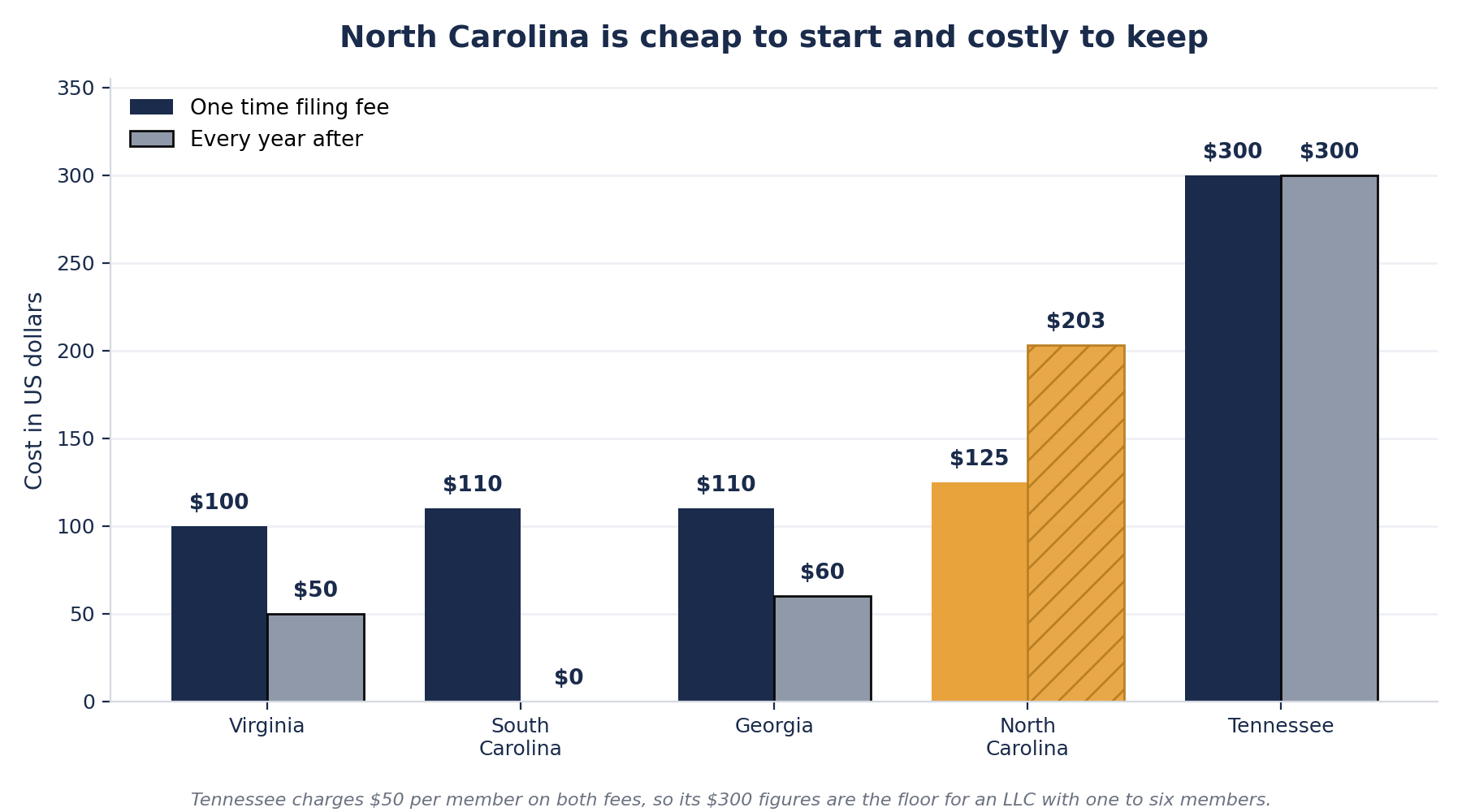
- Annual Report. This one carries a fee. Due by April 15th each year starting the year after you form, at $203 online or $200 by mail through the NC Secretary of State portal.
- State Tax Filings. April 15th again. File your annual NC income tax return with the NC Department of Revenue.
- Registered Agent. Keep one at all times. The address must be a physical North Carolina street address.
- Business Licenses. Renew these annually. Local privilege licenses and industry permits both expire.
Miss the annual report and you face late fees, then administrative dissolution. The date is the thing to remember. Put April 15th somewhere you will actually see it.
Pro Tip
Important
North Carolina Business Background & Context
State-specific data to help you plan — taxes, economy, funding, and what to expect after you form.
North Carolina ranks in the top 10 for business in several national surveys. Three things drive it. Low taxes, a skilled workforce, and infrastructure that reaches the whole state. The 4.5% flat income tax rate is among the lowest in the Southeast.
Charlotte is the second largest banking center in the country. Only New York is bigger. The Research Triangle, meaning Raleigh, Durham and Chapel Hill, draws biotech, software and academic research.
The population passed 10.8 million, which makes North Carolina the 9th most populous state. That is a large home market. It has added more than 100,000 residents a year for the past decade.
Cost of living sits about 5% below the national average. Your money goes further here. That shows up in office space, wages and daily operating costs, and housing runs well below Austin or the Bay Area.
North Carolina issues no general state business license. There is nothing to apply for. Registering for a sales tax permit is free, so neither step adds to your startup costs.
North Carolina Business Climate
The 4.5% flat individual income tax is what most LLC and sole proprietor income pays. Corporations pay less. That rate fell to 2.5% in 2024, part of a decade of cuts.
Combined state and local sales tax runs 6.75% to 7.5%, depending on the county. There is no gross receipts tax.
There is no general business license at the state level. That removes a whole step. Founders moving from California or New York usually find the paperwork lighter here.
CNBC ranked North Carolina the #1 state for business in 2024. Workforce and infrastructure carried the score. Site Selection Magazine has also named it a top state for economic development several years running.
- Banking and Financial Services. Charlotte is the hub. Bank of America and Truist keep their headquarters there, and finance supports over 180,000 jobs statewide.
- Technology. The Research Triangle pulls it in. Apple, Google and Epic Games all run operations there, and tech employment has grown over 25% in five years.
- Life Sciences and Biotechnology. The cluster is large. More than 700 life science companies operate in North Carolina, generating over $90 billion in annual revenue.
- Advanced Manufacturing. Automotive, aerospace and food processing lead. North Carolina ranks among the top 10 states for manufacturing GDP.
- Agriculture and Food Production. Sweet potatoes and tobacco lead the country. Farming contributes over $90 billion to the state economy each year.
- Military and Defense. Two large bases anchor it. Fort Liberty, formerly Fort Bragg, and Camp Lejeune support a wide defense contractor network across eastern North Carolina.
The flat 4.5% individual income tax covers all pass through business income, so LLCs, S-Corps and sole proprietorships all land here. The rate keeps falling. It was 5.25% in 2022 and further cuts are already scheduled.
C-Corporations pay their own rate. It is 2.5% as of 2024. They also owe franchise tax at $1.50 per $1,000. It is charged on the largest of three things. Net worth, tangible property investment, or appraised ad valorem value. The minimum is $200.
The state rate is 4.75%. County and local taxes add 2% to 2.75% on top, which puts the real rate between 6.75% and 7.5% depending on where you sell.
Three taxes simply do not exist here. North Carolina charges no gross receipts tax, no estate tax and no inventory tax, which leaves the overall burden lighter than most of the East Coast.
Estimated tax is quarterly. Payments fall due on the 15th of April, June, September and January. Register and file at the NC Department of Revenue portal.
Property tax is a county matter. Rates vary a lot. Wake County, which contains Raleigh, sits near $0.657 per $100 of assessed value, and rural counties often run well below that.
The cost of living index sits near 95 against a national average of 100. Call it 5% cheaper. Office rent around Raleigh and Durham averages $25 to $30 per square foot a year, far below Washington or New York.
The state minimum wage tracks the federal $7.25 an hour. Market wages sit well above it. Median household income is around $65,000, which reflects a workforce that stays affordable without being unskilled.
Energy runs about 10% below the national average. That matters for manufacturing. Duke Energy and Dominion Energy cover the state, and data heavy operations feel the difference most.
Charlotte and Raleigh sell big city infrastructure at mid market prices. The gap is the point. A founder moving from San Francisco, Boston or New York can expect operating costs to drop 30% to 50% without losing access to talent.
The North Carolina SBTDC runs 15 regional offices. The help is free. Consulting, market research and business plan review all come at no cost, and it is one of the stronger small business networks in the country.
The SBA has a district office in Charlotte. Start there. The North Carolina District Office connects founders to SBA backed lenders. Loans run from $5,000 to $5 million. Most startups without collateral use the 7(a) program.
The NC Rural Center lends and grants into rural counties. Some awards reach $100,000. The Economic Development Partnership of North Carolina keeps a database of state incentive programs worth checking first.
The One North Carolina Fund pays discretionary cash grants for job creation. Size depends on two things. The number of jobs you create and the average wage you pay.
Start with the first 30 days. Apply for your EIN, open a business bank account and register for state taxes at the NC Department of Revenue. Hiring anyone means registering with the NC Division of Employment Security for unemployment insurance before your first payroll.
The next 60 days cover permits and insurance. Write the operating agreement too. North Carolina never asks you to file one with the state, which is exactly why founders skip it and regret it later.
By day 90, set up cloud accounting and file any industry licences you need. Then mark April 15th on the calendar. That is the annual report deadline, and getting organised early is cheaper than fixing a compliance gap later.
Frequently Asked Questions
What to Do Next
Once you've registered your North Carolina business, take these steps to set up for success.
Form Your North Carolina LLC
Step-by-step guide to filing your Articles of Organization for $125 with the NC Secretary of State.
Start Your LLC →
Find a North Carolina Registered Agent
Compare registered agent services with NC addresses starting at $100 per year.
Compare Agents →
Open a Business Bank Account
See the best business checking accounts for new North Carolina LLCs and corporations.
Compare Accounts →
Write Your Business Plan
Use our free template and guide to build a plan that meets SBA and bank lender requirements.
Get the Template →
Explore NC SBTDC Resources
Access free consulting, market research, and training from North Carolina's SBTDC network.
Visit NC SBTDC →
Disclaimer: This guide is for informational purposes only and does not constitute legal or tax advice. Requirements change — always verify current fees and requirements directly with North Carolina Secretary of State and the IRS before filing.

Ready to Form?
Get your North Carolina business registered with Northwest. $39 + state fee includes registered agent, business address, domain, and more.
Was this article helpful?
Questions about starting a business in North Carolina
4 comments
brandi_w
August 30, 2026
running this out of the spare room to start with, just me and a laptop and the occasional client coming by to sign things. does nc care about that or is it only an issue once theres a sign in the yard
Jennifer PayneGeekdiys team
Director of Entrepreneurial Strategy · August 31, 2026
The state does not care at all. Your town or county might, and the trigger is usually not the laptop but the visitors. Most local rules treat a home business as fine while it looks like a house, and start asking questions once there is a sign, regular customer parking, deliveries, or staff who do not live there. Occasional client visits sit right on that line and it varies by jurisdiction. One phone call to your county or town planning office with your address and an honest description settles it, and it is a free call. The other thing worth checking is your homeowner policy, which often excludes business activity and quietly follows you into a claim.
Delia Marchetti
August 8, 2026
Took a morning off to go and get the privilege licence this page says most cities require. The clerk looked at me like I had asked for a fishing permit and said they stopped issuing those years ago. Is this page out of date or did I go to the wrong counter?
Jennifer PayneGeekdiys team
Director of Entrepreneurial Strategy · August 10, 2026
Right counter, out of date page, and I am sorry about the morning. North Carolina took away the general power for cities to charge a business privilege licence more than a decade ago, and most simply stopped issuing them. What is left is narrow and category specific, set by individual statutes rather than by the city choosing, and alcohol retail is the one most people run into. So for an ordinary small business there is usually nothing general to buy at city hall. What can still apply is zoning sign off on your address and any trade licence tied to what you actually do. We have filed this page for correction, it says the wrong thing in three separate places.
Leave a comment